Thursday, 27 September 2012


Learning Log for Matt Lewis - OCA: The Art of Photography

The first thing I want to say here is something I heard on a TV documentary, Perspectives, in which David Suchet follows in the footsteps of his grandfather, Fleet Street photographer Jimmy Jarche. The best piece of equipment any photographer has is his own eyes.  It's not what you see, but how you see it.  Seems like a good attitude to me!

This blog is a continuation of my learning log, following on from the first assignment on contrasts.  No more bad hand writing, photocopying and scanning.


Thursday, 13 September 2012

Exercise - Rhythm and Pattern

Exercise - Rhythm & Patterns

2012.09.08.Rhythm
f/22  1/2000  ISO-2000
Rhythm - In this image there is rhythym in the bars and struts of the pier, brokern by the silhouetted figure and the lifeboat building on the left.
This shot implements also implements lines, points, and triangles.

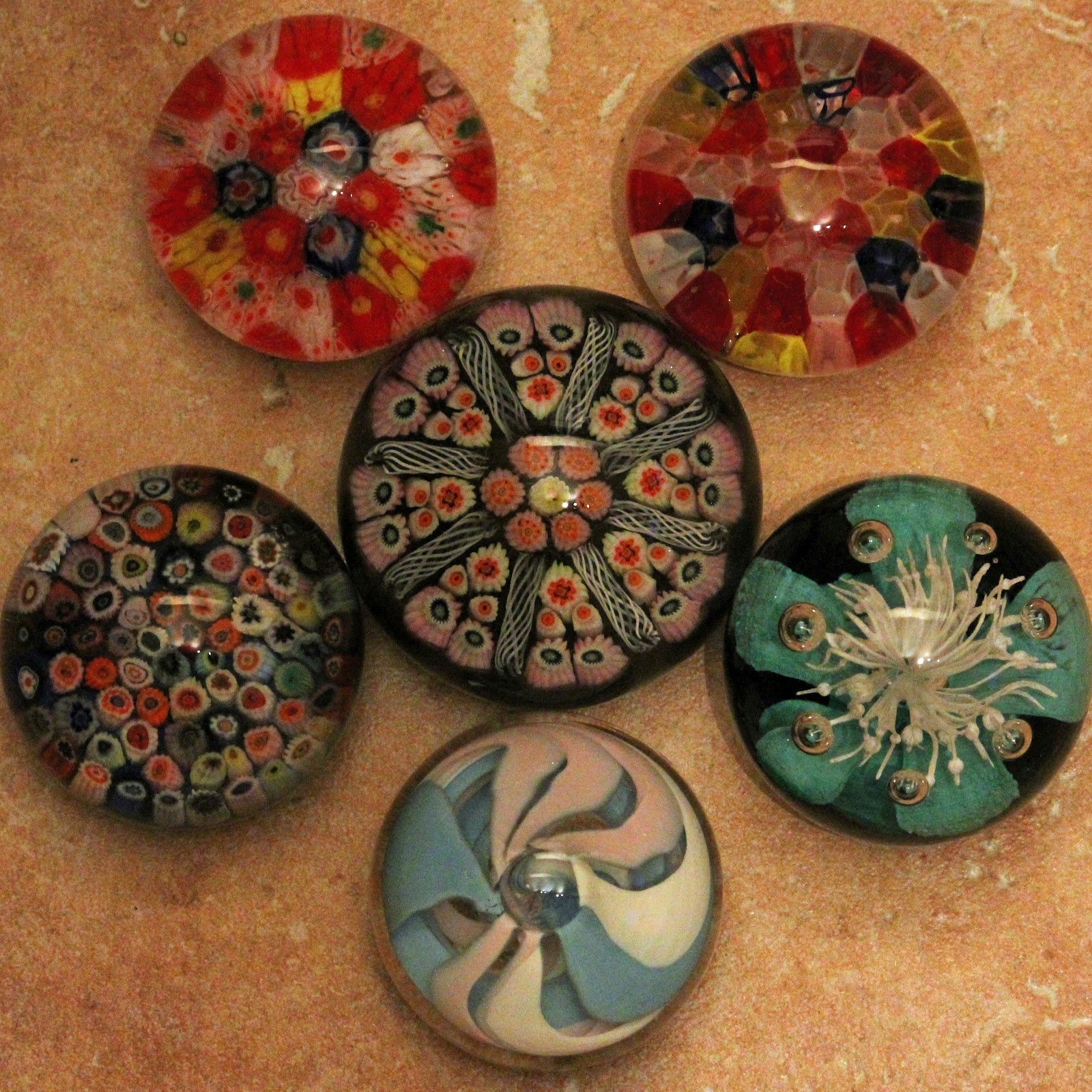
2012.09.09.Pattern
f/8  1/30  ISO-3200
Pattern - A fairly regular pattern has been created here by placing virtually equal sized, and same shaped, objects around one slightly larger one, in a uniformed manor.  I tightly framed the objects to emphasize the shape and pattern.
This image also incorporates shapes in the form of cirlces, and implied triangles through the arrangement of the objects.

Saturday, 1 September 2012

Exercise - Real & Implied Traingles

Real

2012.08.23.TrianglesReal1.jpg
f/5.6  1/30  ISO-100


This section of the roof area of my greenhouse may not seem the most exciting subject.  However, I felt it was a good example of how lines and shapes can be found everywhere.  The main triangle dominating the frame, sits above several lines with the door and door frames, circles in the bottom right corner, and a rectangle in the centre.  Slightly abstract perhaps, although the empty pot tray gives a small clue.

2012.08.11.TrianglesPerspectiveTop.jpg
f/12  1/80  ISO-100
 The flat roof of this shed is given a more dynamic shape, forming a triangle with the apex at the top, by moving close and shooting upwards.
2012.08.26.TranglesPerspectiveBottom.jpg
f/16 1/50 ISO-1000
 The semi-circular opening of this mesh bag, now appears triangular through adopting a different perspective.   
Implied
2012.08.23.TrianglesImplied-StillLife1.jpg
f/9  1/30  ISO-3200
In this image, the apex is at the top but close to the corner, so the diagonal sides of the triangle create some tension and movement.

2012.08.21.TrianglesImplied-StillLife2.jpg
f/5  1/30  ISO-125
A similare idea here, although reversed, and with only two sides to the triangle there is an implied line between the top two elephants.

2012.08.26.TrianglesImpliedFaces.jpg
f/11  1/50  ISO-100
The points of the three faces in the frame, imply a triangular shape with the apex at the top.
                                   

Composing images to create shapes, in particular triangles, help to create order and clarity to an image when needed.


Sunday, 22 July 2012

Exercise - Implied Lines

In the picture to the left, there appear to be two dominant lines.  One is a continuation of the curved line in the dirt, up the yellow edge of the cape to the yellow marking on the bull.  There is also a clear line along the back of the bull, across the matador's shoulders and extending along the edge of the cape.
 There are several eye lines at work in this scene, although the two indicated are the strongest, leading the viewer from the edges of the scene into the main points of interest, around the food prearation.
The direction of the walker leads the viewer to the other figures by the steps and then up to the house.
Although the sheep on the left is also looking towards the camera, the sight lines of the two other sheep match up to create one strongly implied line.
2012.07.22.ImpliedLines-EyeLine
f/22  1/320  ISO-1000
The position of the person's body and angle of their head implies an eye-line towards the structure in the top right corner of the frame.
2012.07.22.ImpliedLines-LinesThatPoint
f22  1/320  ISO-500
The three lines of gaps and joins of the jetty direct the viewer to the small sail boat in the distance.  The slight curve of the lines towards the end adds some tension and movement to the shot.


Monday, 16 July 2012

Exercise - Curves

2012.07.15.Curves-Arches
f/8  1/40  ISO-100
2012.07.15.Curves-SaatchiEntrance
f/8  1/40  ISO-125
2012.07.15.Curves-PeterJones
f/8  1/40  ISO-160
2012.07.07.Curves-Footbridge
f/9  1/80  ISO-400

As with diagonals, curves creat a feelikng of movement, which can be strenghtened by adopting a acute angle of view.  In the above image of a footbridge, the curvature of the railings dipping away is enforced by the low perspective of the chosen viewpoint.

Examples

Cartier-Bresson, H.  (1999).  The Europeans. First Edition.  London: Thames & Hudson.
In image 22 - Hyeres, France, 1932, Cartier-Bresson uses the curvature of the kerb and bend of the stairs to direct the viewer to the cyclist.  The cuves add to the sense of movement of the slightly blurred cyclist, and help bring the whole scene to life.

Cotton, C. (2009). The Photograph as Contemporary Art.  Second Edition.  London: Thames & Hudson.
126. James Welling, Ravenstein 6, 2001
This photograph makes use of the natural curvature of circles, with one inside another, the repetitive curves create a spiraling effect, almost sucking you in.

Saturday, 14 July 2012

Study Visit: Out of Focus - Saatchi Gallery

The first thing to say is that this is a massive exhibition.  There was a lot to take in and a wide spectrum of work.  This exhibition really showed how the digital era has made all things possible; there really are no limits, expect perhaps in personal taste.

I do feel that the boundaries between photography and digital art are somewhat blurred, at Saatchi at least.  Some of the works here were to me really digital art, or mixed media, rather than photography,
Mariah Robertson's MR1, MR2 & MR3 for example.  John Stezaker's collages were for the most part put together cleverly but is it really photography?  He basically stuck postcards on old photos.  It is interesting work, but he hasn't actually taken any photos in the whole collection.

Katy Grannan's portraits were large prints displayed on every wall in Gallery One.  As they were all shot in a similar way, in bright sunlight against white walls, yet each of the subjects very individual, the whole collection was quite striking.  The emphasis was very much on individuality and the subjects certainly appeared unique characters.  They aren't flattering shots, although you do get a sense that Grannan has captured the personality of the subject.

Matthew Day Jackson's The Lower 48 at first glance appeared to a bit of a mish mash of photos of rocks.  Look closely though, and you can see a face in each one.  I must admit that standing close to this display I didn't notice the faces in the gallery.  It was later on when looking through the book that I suddenly saw what these images were about.  So a lesson learnt, look for the point of an image or collection.

The largest exhibits were from Mat Collishaw and they certainly warranted a wall each.  These ceramic mosaics were impressive close up and appreciated from afar.  You could say that you need to take a few steps back to appreciate the whole exhibition, as there is so much work on display and such diversity.


Sunday, 8 July 2012

Exercise - Diagonals

2012.07.01.Diagonals-Wall
f/8  1/640  ISO-400
2012.07.07.Diagonals-Bench
f/9  1/80  ISO-640
2012.07.07.Diagonals-BurntField
f/9  1/80  ISO-125
2012.07.15.Diagonals-Balconies
f/8  1/40  ISO-160

A few examples of diagonals in the book I'm currently reading, Charlotte Cotton - The photograph as Contemporary Art:
1) Page 50 - Jeff Wall, Insomnia, 1994
Diagonals are created by the positioning of the table, chairs and even the body on the floor.  Also, the viewpoint creates diagonals on the edges of the oven.
2) Page 155 - Yang Yong, Fancy In Tunnel, 2003
The angle of view to the wall has created many diagonals along the lines of tiles and the edges with the floor and ceiling.
3) Page 180 - Allan Sekula, Conclusion of Search for the Disabled and Drifting Sailboat 'Happy Ending', 1993-2000
The middle and bottom images both make use of a high viewpoint looking down to make strong vertical lines from beams.

The use of diagonals can be seen widely used in the work of Henrie-Carier Bresson.  In Palais-Royal, Paris, France, 1959* a series of diagonal lines in the form of tree tops, windows and balconies flow from the bottom left of the frame to the top.  Extra interest is added, with the help of perfect timing, to capture the figure walking through the gap towards the bottom left and several more distant figures in the background.  The diagonals in this image are created by perspective.
*Clair, J / Cartier-Bresson, H. (1999). First edition.  London, Thames and Hudson Ltd.